
I ran a short-form video workflow that included AI-assisted scripting, editing suggestions, and caption generation, then checked whether the final pieces still sounded and felt like the original creator. The efficiency gains were measurable. Voice preservation required deliberate human intervention at multiple stages.
This is from a real, full workflow test. I am Lena Voss. Voice is the core asset for most independent creators. I evaluate any AI video workflow by whether that asset survives contact with the tools. No theory — just what happened when I actually ran it.
The Workflow Stages Tested
The test covered five sequential stages using a real 20-minute source conversation as the starting point:
Source conversation or raw footage
AI-assisted script extraction and tightening
Editing suggestions for pacing and cuts
Caption and on-screen text generation
Final review against original voice samples
Each stage introduced both speed and risk of drift. I recorded time, voice-fidelity notes, and the amount of human restoration required after every stage.
Voice Preservation Checkpoints
Stage | Speed Gain | Voice Risk | Human Fix Required | Notes from Test |
|---|---|---|---|---|
Script extraction | High | Medium | Yes | Smoothed distinctive phrasing |
Pacing suggestions | Medium | Low-Medium | Sometimes | Occasional loss of emotional beats |
Captions | High | Medium | Yes | Flattened emphasis |
Final assembly | — | High if unchecked | Always | Cumulative drift visible |
Voice restore pass | — | — | Mandatory | Restored recognizability |
The table reflects the pattern observed in this controlled test with one creator’s material.
Where Voice Drift Appeared
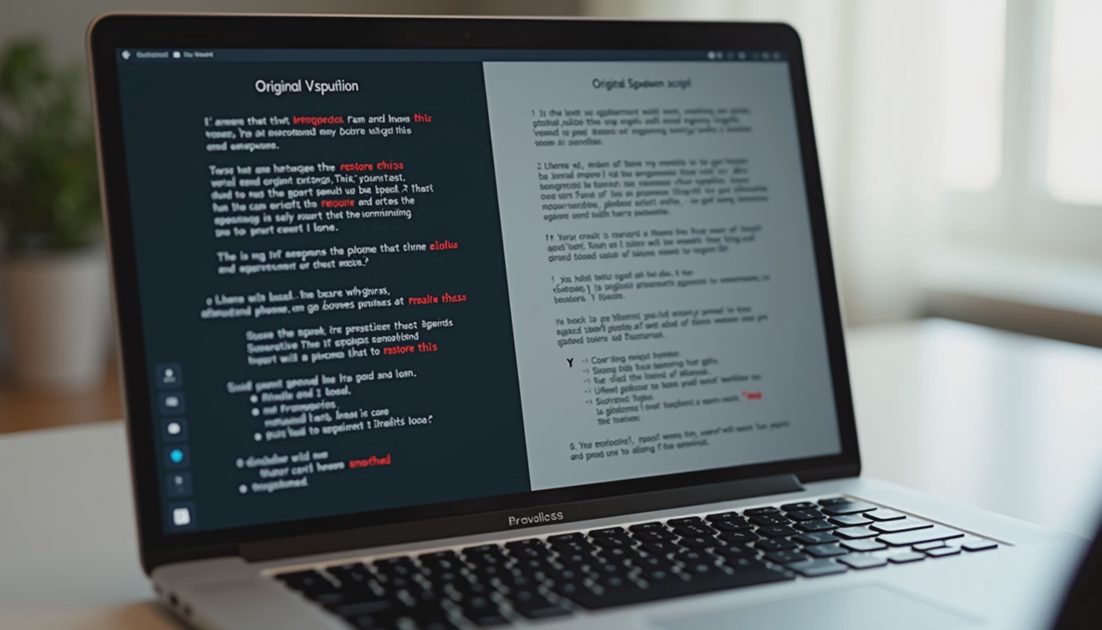
The AI scripts often removed hesitations and specific word choices that made the speaker recognizable. Captions sometimes flattened emphasis that had been present in the spoken delivery. Pacing suggestions occasionally cut moments that carried emotional weight or personal texture. None of these changes were dramatic in isolation. Together they produced pieces that felt cleaner and less personal.
I restored the distinctive elements by returning to the original audio and reference samples at every stage. The final usable videos required that extra pass. Without it, the content would have been publishable in a technical sense and forgettable in a personal sense.
Practical Time Notes
AI script and caption generation: under 25 minutes for a week’s worth of short pieces
Human voice-restore and final review: 70–90 minutes
Net result still faster than fully manual scripting and captioning, provided the restore step is not skipped
The restore step is the difference between content that sounds like the creator and content that sounds like a polished generic version of the creator.
Practical Workflow Adjustments I Now Use
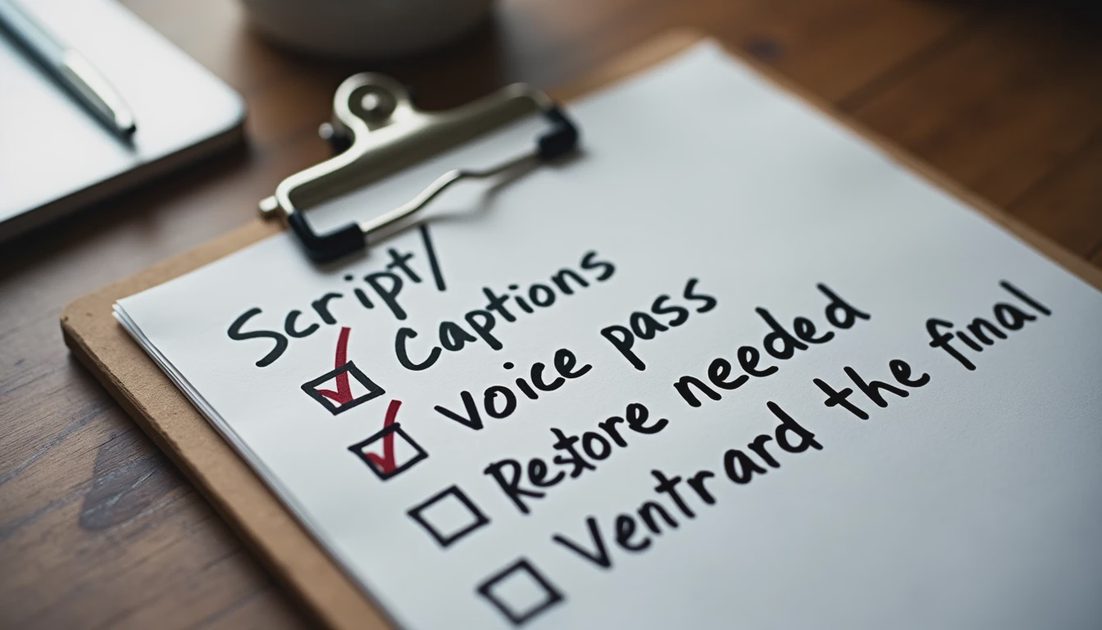
Keep original audio open during every AI stage.
Score scripts and captions against real speech samples before accepting them.
Treat AI suggestions as proposals, not final decisions.
Budget explicit time for voice restoration before publishing.
Apply the same five-post consistency logic used in brand-voice tests to short-form video sets.
These adjustments keep the speed gains while protecting the asset that most creators are actually selling: their recognizable voice.
Tested it properly. Here’s the real result: an AI video workflow can accelerate production and still needs human voice protection if the creator’s actual sound is the product.
Connection to Larger Voice & Cut Work
This test sits inside Voice & Cut and connects directly to earlier examinations of transcript editing and conversation-to-content workflows. The same underlying tension appears across formats: automation is fast at cleaning and structuring; it is less reliable at preserving the specific rhythm and word choice that make a person sound like themselves.
Future posts will continue examining the points where automation helps and where it erases what makes a creator recognizable. The working rule remains consistent: the final piece must still sound like the person who spoke.
Additional Process Notes from the Test
I recorded the full sequence in a simple log that included setup time, number of generation rounds, revision notes, and the final verdict. The log is private until the test is complete; only then do the results appear here. This habit prevents partial impressions from becoming public recommendations.
The most useful observations almost always appear after the second or third revision round. First outputs can look strong. The real behavior of the tool—how it handles layered feedback, whether it holds earlier decisions, how consistency drifts—only becomes visible under repeated professional pressure. That is why every test on this site runs to a finished deliverable rather than stopping at the impressive first frame.
I also keep a short list of failure modes that have repeated across tools and categories: loss of directional control at revision three, voice or character drift across a short series, time cost that exceeds the value of the result, and residual generic language or visual clichés that would not survive a client review. Any one of these is enough for a “not worth the workflow” or “use selectively” verdict.
The goal is not to find perfect tools. The goal is to map, as honestly as possible, where current AI systems help and where they still require substantial human judgment. The posts that follow continue that mapping with the same standard: complete process, real constraints, and a final filter that asks whether the work would actually be sent to a client.
Comments
No comments yet — be the first to share a thought.